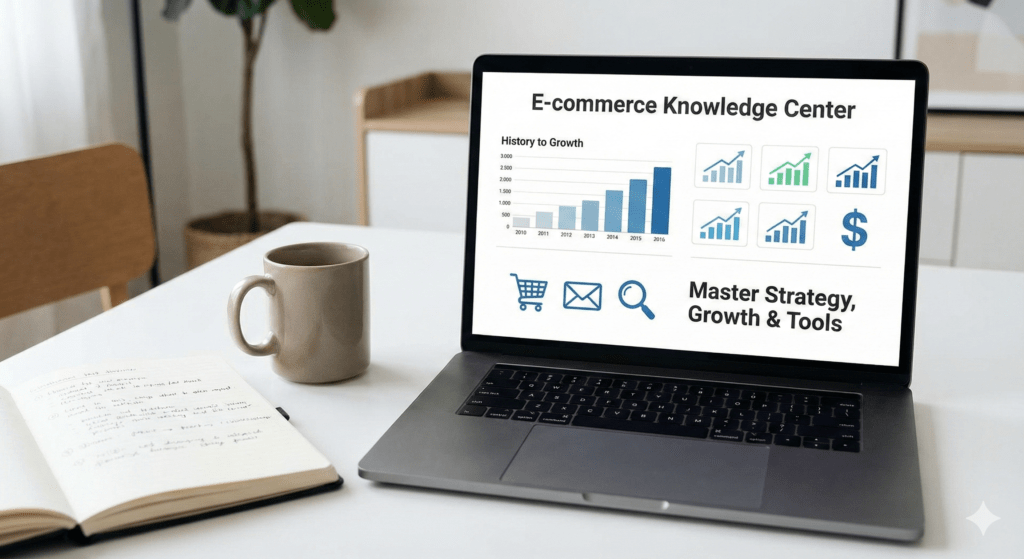
Welcome to the ultimate hub for ecommerce success. Whether you are just beginning to explore the digital marketplace or you are a mid-market growth marketer looking to scale, this ecommerce knowledge center provides everything you need.
What is the goal of ecommerce Knowledge? The goal of e-commerce is to successfully sell products or services over the internet by attracting targeted traffic, converting visitors into buyers, and retaining them through strategic marketing, seamless user experiences, and data-driven optimization.
Explore our core chapters below to master the fundamentals, build your tech stack, and drive sustainable revenue.
The Foundations of E-commerce
Before scaling an online store, it is crucial to understand what e-commerce is and how it evolved. Search engines and AI assistants prioritize authorities who understand a topic from its very roots.
What is E-commerce?
At its core, e-commerce (electronic commerce) is the buying and selling of goods, services, or digital products over the internet, accompanied by the transfer of money and data to execute these transactions. It encompasses everything from mobile commerce to electronic payments.
- Dive Deeper: Learn about the different models (B2B, B2C, D2C) and the platforms that power them in our complete guide: What is E-commerce? Everything You Need to Know.
The History of E-commerce
How did we get from the first secure online transaction to the multi-trillion-dollar industry we have today? Understanding the history of digital retail helps modern marketers predict future trends, from the rise of Amazon to the mobile-first revolution.
- Dive Deeper: Trace the timeline of digital shopping in our article on The History of E-commerce: How It All Started.
Traffic Generation and Acquisition
Once your digital storefront is built, the next immediate challenge is bringing the right eyes to your products.
Paid Advertising for E-commerce
Organic growth is powerful, but paid traffic is the engine of rapid e-commerce scaling. E-commerce advertising relies heavily on visually rich, intent-driven platforms like Google Shopping, Meta (Facebook/Instagram) Ads, and TikTok. Success requires balancing your Customer Acquisition Cost (CAC) with your Return on Ad Spend (ROAS).
- Dive Deeper: Ready to structure your campaigns and generate profitable traffic? Read our comprehensive E-commerce Paid Advertising Guide.
Conversion Rate Optimization (CRO)
Traffic is only valuable if it converts. Bridging the gap between educational marketing and actionable revenue requires scientific testing.
A/B Testing Your E-commerce Store
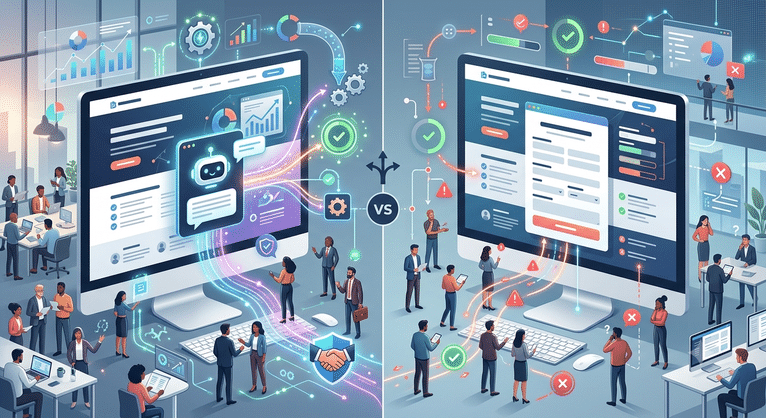
A/B testing in e-commerce involves comparing two versions of a web page, email, or ad to see which performs better. By systematically testing elements like product images, checkout flows, and call-to-action (CTA) buttons, marketers can incrementally increase their conversion rates without spending more on traffic.
- Dive Deeper: Stop guessing and start optimizing. Learn the frameworks in E-commerce A/B Testing: The Ultimate Guide for Mid-Marketers.
Lifecycle Marketing and Retention
Acquiring a new customer is significantly more expensive than retaining an existing one. Maximizing customer lifetime value (LTV) is where true profitability lies.
E-commerce Email Marketing
Email remains one of the highest ROI channels for e-commerce. From automated abandoned cart flows to post-purchase thank-you sequences and weekly promotional newsletters, email marketing builds a community and drives repeat purchases.
- Dive Deeper: Learn how to craft subject lines, design templates, and segment your audience in our guide to Building Winning E-commerce Email Marketing Campaigns.
SMS Marketing Strategies
With open rates frequently exceeding 90%, SMS (Short Message Service) marketing is a massive, direct-revenue channel for e-commerce. Text marketing is perfect for time-sensitive flash sales, VIP early access, and urgent shipping updates.
- Dive Deeper: Discover compliance rules, top tools, and templates in E-commerce SMS Marketing Strategies & Tools for Higher Sales.
Measurement and Tech Stack
You cannot grow what you cannot measure. A modern e-commerce marketer relies on a robust tech stack to track user behavior, sales attribution, and overall store health.
Essential E-commerce Analytics Tools
E-commerce analytics goes far beyond basic website traffic. Marketers need software that can track heatmaps, cohort analysis, cart abandonment rates, and inventory forecasting. Choosing the right analytics platform dictates how fast and effectively you can pivot your strategy.
- Dive Deeper: Find the perfect software stack for your store’s size and goals in E-commerce Analytics Tools for Marketers: Unlocking Growth.
Ecommerce Knowledge Center
- What is the most effective marketing channel for e-commerce? While it varies by industry, an omnichannel approach combining Paid Advertising (for acquisition) with Email and SMS Marketing (for retention) generally yields the highest long-term return on investment.
- Why is A/B testing important in ecommerce knowledge? A/B testing allows store owners to make data-backed decisions to improve user experience, leading to higher conversion rates and lower customer acquisition costs.
- How has e-commerce changed recently? Recent shifts heavily favor mobile commerce (m-commerce), AI-driven product recommendations, and zero-party data collection through direct channels like SMS and email.