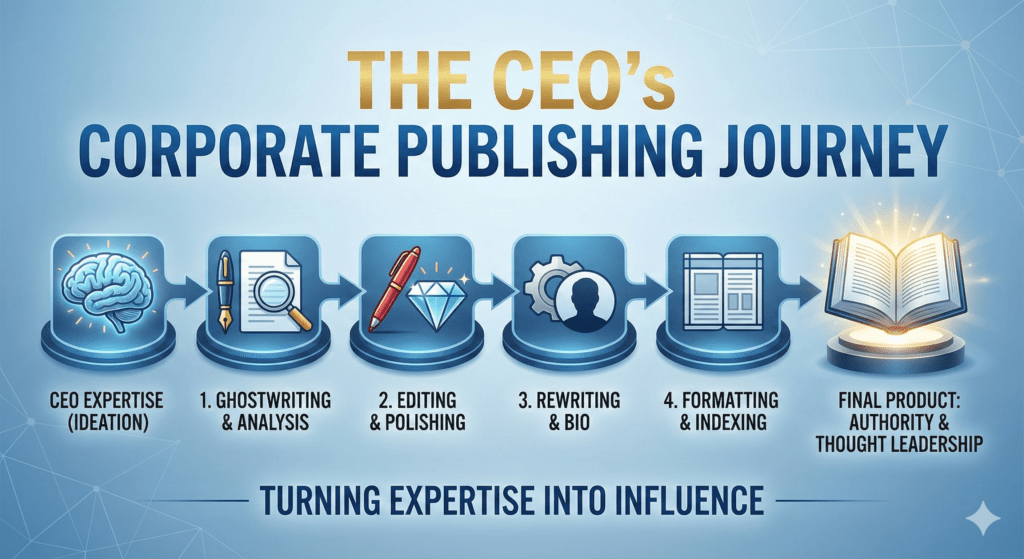
In the noisy world of B2B, “expertise” is the only currency that matters. You can buy ads, and you can rent attention, but you cannot buy authority. You have to build it. And in 2025, the most powerful tool for building authority remains what it has been for centuries: The Book. Writing a book isn’t just about ego; it’s a strategic lever. It opens doors that cold calls cannot. It turns a “sales pitch” into “consulting.” But the path from idea to bestseller is filled with traps. How do you find the time? How do you ensure it doesn’t sound amateur? This Publishing guide walks you through the entire corporate publishing lifecycle, from the first draft to the final bookshelf.
1. Ghostwriting: The Power of the Pen (Without the Time)
The Logic: You have the vision, but not the hours. Ghostwriting bridges the gap between your brain and the page.
The biggest myth in publishing guide is that CEOs sit alone in a cabin writing their memoirs. The reality? Most business bestsellers are collaborative efforts.
Ghostwriting allows you to “download” your expertise to a professional writer who structures it into a compelling narrative. It captures your voice and your stories, but without you spending 6 months staring at a cursor. It is the ultimate leverage of your time.
Unlock the Secret: > The Power of the Pen: Why Ghostwriting is a Secret Weapon for Startups
2. Manuscript Analysis: The Feasibility Study
The Logic: You wouldn’t launch a product without market research. Don’t launch a book without a manuscript audit.
Before you commit to editing or publishing, you need to know if the book actually works. Manuscript Analysis is the “Alpha Test” of your content.
A professional analyst reviews your draft not for grammar, but for logic. Is the argument sound? Is the pacing right? Does it actually solve a problem for the reader? This step saves you thousands of dollars by fixing structural flaws before they become permanent.
Get an Audit: > The Untapped Advantage: Why Manuscript Analysis is a Boon for Business
3. Book Editing & Polish: The Quality Control
The Logic: Authority requires perfection. A typo in a business book isn’t a mistake; it’s a loss of credibility.
Once the draft is done, the real work begins. Professional Editing is the difference between a self-published PDF and a legacy-building book.
This isn’t just spellcheck. It’s developmental editing (fixing the flow) and copy editing (fixing the prose). A great editor challenges you. They cut the fluff, sharpen the hooks, and ensure that every sentence earns its place.
Polish Your Work: > The Unsung Hero: Why Book Editor Services Are Essential
4. Book Rewriting: The Rescue Mission
The Logic: Sometimes the first draft isn’t just rough; it’s wrong. Rewriting is how you save the project.
Did you write a draft years ago that sits in a drawer? Or did you hire a cheap freelancer who missed the mark? Book Rewriting is the service that saves your intellectual property.
It involves taking the core ideas of a failed draft and reconstructing them. It’s not starting over; it’s a renovation. It turns a “sunk cost” into a viable asset.
Save Your Manuscript: > Struggling with Book Rewriting? Here’s Why You Should Outsource
5. Author Bio Writing: The Personal Brand
The Logic: People buy the author, not just the book. Your bio is your elevator pitch.
The “About the Author” section is often the first thing potential clients read. If it’s boring, they assume the book is boring.
Professional Bio Writing frames your career narrative to position you as the definitive expert. It balances humility with authority, ensuring the reader knows exactly why they should listen to you.
Elevate Your Brand: > Elevate Your Author Brand: The Power of Professional Bio Writing
6. Formatting & Indexing: The Professional Standard
The Logic: The reading experience matters. Poor formatting screams “amateur.”
You might have a great text, but if the margins are off, the font is painful, or there is no index, you lose the reader. Formatting & Indexing are the technical details that signal quality.
In B2B non-fiction, a good index is crucial—readers use it to find specific answers. It turns your book into a reference tool rather than just a one-time read.
Fix the Details: > Struggling with Formatting & Indexing Your Manuscript?
7. Publishing Guide: From Startup to Shelf
The Logic: A book that isn’t read is a paperweight. Distribution is the goal.
The final mile is Publishing. This covers cover design, ISBN registration, and distribution into bookstores and Amazon.
For business leaders, the goal is often “Hybrid Publishing“—retaining the rights and profits (like self-publishing) but with the distribution power of a traditional house. This ensures your book is available where your customers shop.
Go to Market: > From Startup to Shelf: Why Book Publishing Services Are Essential
Conclusion: Your Legacy in Print
A corporate Publishing guide is the ultimate business card. It lasts longer than a webinar and holds more weight than a tweet. By navigating these seven stages—from ghostwriting to publishing—you ensure that your thought leadership is built on a foundation of quality.
Ready to start? If you have an idea but no time, start with Ghostwriting (Section 1). If you have a draft but no confidence, start with Manuscript Analysis (Section 2).