A hybrid B2B buyer journey is a buying process that combines digital self-service with human sales support. Buyers can research, compare, and shortlist on their own, then connect with a sales expert when they need reassurance or help making the final decision.
This approach fits how modern B2B buyers actually behave. They want speed, privacy, and control at the start, but they still want a human they can trust when the deal becomes complex or high-stakes.
Why Buyers Want Both Freedom and Guidance
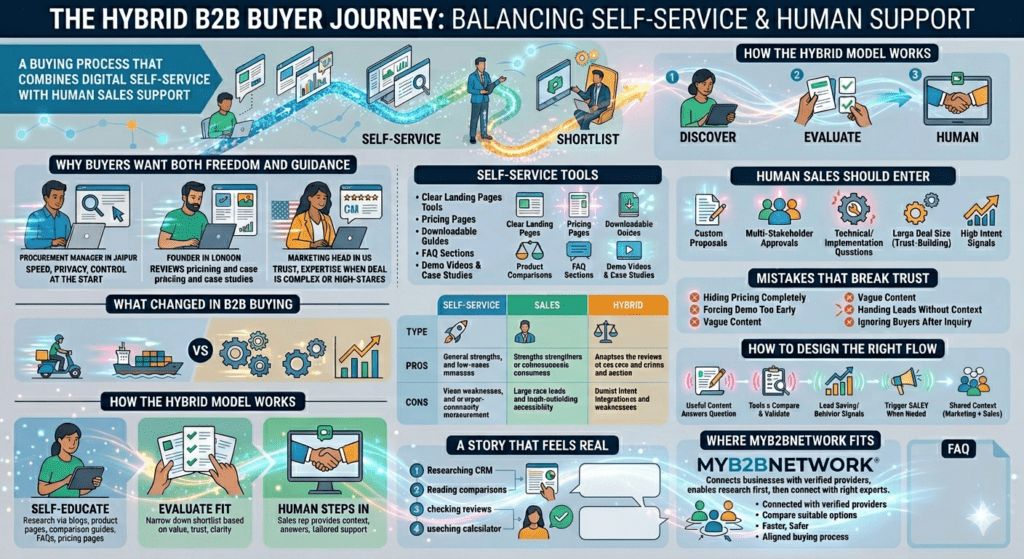
A procurement manager in Jaipur may begin by comparing vendors online during lunch. A founder in London may want to review pricing and case studies before ever speaking to a rep. A marketing head in the US may download a guide, check reviews, and send the shortlist to finance before scheduling a call.
That is the reality of B2B buying now. Buyers expect self-service first, but they do not always want self-service only.
The tension is simple: digital buying feels fast and efficient, but complex purchases still create doubt. Human sales helps remove that doubt at the moment it matters most.
What Changed in B2B Buying
Today’s buyers behave more like consumers than ever before. They want instant answers, transparent information, and less pressure from sales teams.
At the same time, B2B deals are often bigger, slower, and riskier than consumer purchases. That means even confident buyers may still need help with integration, ROI, implementation, or stakeholder approval.
A hybrid journey works because it respects both sides of the equation. Buyers can move independently at first, then get expert guidance when the purchase becomes more serious.
How the Hybrid B2B Buyer Model Works
The hybrid model usually follows three stages.
First, buyers self-educate through blogs, product pages, comparison guides, FAQs, and pricing pages. Then they evaluate fit, narrowing down a shortlist based on value, trust, and clarity. Finally, a sales rep steps in with context, answers, and tailored support.
This handoff matters. When marketing and sales work together, the buyer feels understood instead of chased.
A good hybrid journey does not interrupt research. It supports it.
Self-Service That Builds Confidence
Self-service is strongest when buyers are still exploring. They want to understand the problem, compare options, and decide whether a vendor is worth a conversation.
Good self-service tools include:
- Clear landing pages with simple language.
- Pricing or packaging pages.
- Downloadable guides and checklists.
- Product comparison pages.
- FAQ sections that answer common objections.
- Demo videos and case studies.
These assets reduce friction. They also help a buyer move from curiosity to confidence without pressure.
For example, a B2B buyer looking for marketing automation services may first read a guide, compare providers, and check testimonials before requesting a quote. That journey feels natural because the buyer stays in control.
When Human Sales Should Enter
Human sales becomes essential when the buyer needs clarity, reassurance, or customization. This often happens in high-value or multi-stakeholder purchases.
Sales should step in when:
- The buyer requests a custom proposal.
- The purchase needs approvals from more than one team.
- The buyer asks technical or implementation questions.
- The deal size is large enough to require trust-building.
- The visitor shows high intent through repeated engagement.
The best salespeople act like guides, not pressure points. They take the buyer’s research and turn it into a decision.
A simple way to think about it: self-service helps buyers discover, while sales helps them decide.
Self-Service vs Sales-Assisted
| Journey Type | Best For | Strengths | Weaknesses |
|---|---|---|---|
| Self-Service | Simple or lower-risk purchases | Fast, scalable, buyer-friendly | Less support for objections |
| Sales-Assisted | Complex or high-ticket deals | Personal, persuasive, flexible | Slower and more resource-heavy |
| Hybrid Journey | Most modern B2B buying paths | Balanced, trust-building, conversion-friendly | Requires smart handoffs |
The hybrid model works best because it gives buyers room to explore without leaving them stranded when the decision gets harder.
A Story That Feels Real
Imagine a mid-level marketer at a growing SaaS company. She needs a new CRM service, but she does not want a long sales call on day one.
She starts with self-service content, reads vendor comparisons, and checks reviews. Then she uses a calculator or form to estimate fit. Once she is serious, a sales rep enters the process with a tailored recommendation, relevant use cases, and proof that the service can integrate with her current tools.
That experience feels helpful, not pushy. And that is exactly why hybrid journeys convert better.
Mistakes That Break Trust
Many B2B companies still make the journey harder than it should be.
Common mistakes include:
- Hiding pricing completely.
- Forcing a demo too early.
- Publishing vague content with no real examples.
- Handing leads to sales without context.
- Ignoring buyers after the first inquiry.
These mistakes create friction. They also make the buyer feel like the company is more interested in capturing the lead than helping with the decision.
A strong hybrid journey feels open, informed, and responsive from start to finish.
How to Design the Right Flow
A well-designed hybrid B2B buyer journey follows the buyer’s pace.
Start with useful content that answers real questions. Then give buyers tools to compare, shortlist, and validate. After that, use lead scoring, behavior signals, or form submissions to trigger sales involvement only when needed.
You can also improve the transition by sharing context between marketing and sales. If a buyer downloaded a pricing guide and visited the comparison page three times, the rep should know that before making contact.
That is how you make the experience feel seamless.
Where MyB2BNetwork Fits
This model is especially useful in B2B service discovery. Many businesses want to research service providers on their own first, but they still want help connecting with the right experts when they are ready to move.
MyB2BNetwork supports that journey by helping businesses connect with verified providers, compare suitable options, and move from research to action with less wasted time. If a business needs help beyond what it offers directly, it can still be connected with provider companies that specialize in that niche.
That makes the buying process faster, safer, and far more aligned with how B2B decisions actually happen.
FAQ
What is a hybrid B2B buyer journey?
It is a buying path that combines self-service research with human sales support at the right stage.
Why is the hybrid model becoming more popular?
Because buyers want control early, but still need expert help when the decision becomes complex.
When should sales contact a buyer?
When intent is high, the deal is complex, or the buyer asks for custom guidance.
What self-service tools work best?
Pricing pages, comparison content, FAQs, demo videos, and downloadable guides.
How does this improve conversions?
It reduces friction, builds trust, and gives buyers the right kind of support at the right time.
If your business wants to move faster without losing trust, the hybrid journey is the smarter path. MyB2BNetwork helps you connect with verified service providers, so you can outsource what you need with confidence and keep your buying process simple, efficient, and high-converting.