US state privacy laws affect B2B marketing far less than most teams fear, and far more than some teams assume. Outside California, nearly every comprehensive state privacy law exempts individuals acting in a commercial or business context, so a typical B2B prospect isn’t a “consumer” under those statutes. California is the exception, and a few obligations elsewhere still reach B2B teams indirectly.
That split is why so many marketing and sales leaders land in one of two camps: panic about a 20-plus-state “patchwork,” or a shrug that says “we only sell to businesses, so none of this applies.” Both are wrong, and both are expensive when they turn out to be wrong.
This Q&A walks through the questions B2B marketers, RevOps leads, and founders actually ask. It covers which laws matter, where the B2B exemption stops, what changes for email, ads, and purchased lists, and what to do about it. It’s general information, not legal advice, so confirm specifics with counsel before changing your program.
What Are US State Privacy Laws, and Why Do They Matter to B2B Teams?
US state privacy laws are state-level statutes giving residents rights over their personal data, such as access, deletion, and opting out of sales or targeted advertising, in the absence of a single federal privacy law. They matter to B2B teams because a business contact’s name, work email, and browsing behavior can still be personal data, and the rules differ by state.
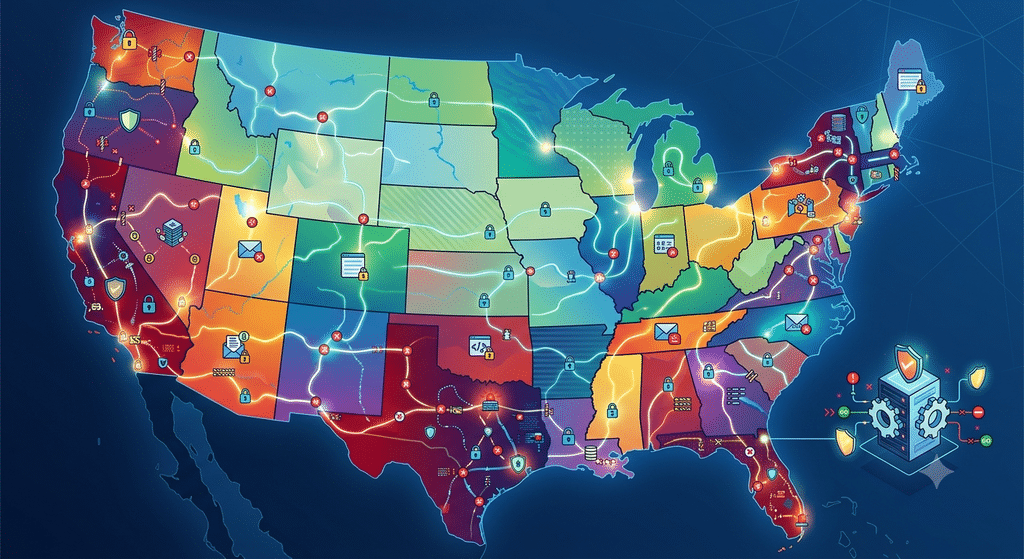
The count keeps moving. One legal tracker reports the landscape grew from 20 comprehensive state laws at the start of 2026 to 24 after a new legislative wave, while another counts 23, so treat any single number as a snapshot rather than a fixed figure. Most of these laws follow a similar model, which makes a single baseline program workable.
How Do US State Privacy Laws Affect B2B Marketing Through the B2B Exemption?
The B2B exemption is the single biggest factor in how US state privacy laws affect B2B marketing. Outside California, comprehensive state laws generally exclude individuals acting in a commercial or employment context from the definition of “consumer,” which takes most ordinary B2B prospecting out of scope.
California is the outlier. According to legal analyses published in 2026, the California Consumer Privacy Act is the only comprehensive state law with no B2B or employee-data exemption. The state’s partial exemptions expired on January 1, 2023, so a sales contact in California generally has the same rights as any other California resident.
The newest laws follow the common pattern. Paul Hastings reported in June 2026 that four new comprehensive laws (Oklahoma, Louisiana, Alabama, and Vermont) do not apply to employment-context or B2B data.
Where Does the B2B Exemption Stop?
The exemption stops wherever you stop acting in a purely commercial relationship. A few common situations pull B2B marketing back into scope:
- California contacts. Any California-based prospect or customer can exercise CCPA rights, including access, deletion, and opting out of sale or sharing.
- Mixed-use data. Personal email addresses, or a founder’s personal social profile used to target ads, may not be treated as “commercial context.”
- Sole proprietors and small-business owners. Whether they count as acting commercially varies by statute, so don’t assume.
- Sensitive data. Several states require opt-in consent for sensitive categories, and Maryland has gone furthest, with reporting that its law bans the sale of sensitive personal data outright.
The practical takeaway: “we’re B2B” is a starting point for analysis, not a compliance strategy.
How Do US State Privacy Laws Affect B2B Marketing Tactics Like Email, Ads, and Lists?
They affect them mainly through opt-out signals, data sourcing, and vendor contracts rather than through bans on outreach itself. Here is where teams most often feel it:
- Targeted advertising. Many states require businesses to honor universal opt-out signals such as Global Privacy Control. If your site feeds retargeting pixels, those signals may need to be respected for in-scope visitors.
- Purchased lists and data enrichment. California regulates data brokers, with new registration-related obligations reported to begin August 1, 2026. Ask list vendors how they source and register data.
- Email outreach. The federal CAN-SPAM Act applies to commercial email regardless of state law. It requires honest headers, a physical address, and a working opt-out.
- Vendor and agency contracts. State laws expect written agreements with processors that handle personal data on your behalf, which covers many marketing agencies and SDR vendors.
What Is a Practical Compliance Model for B2B Marketers?
A sensible approach is to build one baseline program around the strictest rule you’re likely to face, then add state-specific exceptions only where needed. Call it the Scope-Source-Signal check, a simple three-question model for this article:
- Scope: Which contacts are in scope (California residents, personal-email contacts, sensitive data)?
- Source: Where did each data point come from, and can the vendor document it?
- Signal: Do your site, ad stack, and email tools honor opt-outs and universal signals?
If you can answer all three for each campaign, you’ve covered most of the realistic exposure.
FAQ
How do US state privacy laws affect B2B marketing, and why does it matter?
Outside California, most state laws exempt business-context data, so ordinary B2B prospecting is largely out of scope. California has no such exemption, and rules on opt-out signals, data brokers, and vendor contracts can still reach B2B programs, which makes a documented baseline worthwhile.
How do I choose a compliance-friendly vendor or tool within my budget?
Favor vendors that can explain, in writing, how they source contact data and honor opt-outs. Compare cost against what’s included, since consent management, data-processing agreements, and audit support are sometimes priced separately.
What checks should I do before outsourcing data-driven marketing?
Request a data-processing agreement, sourcing documentation for any purchased lists, and evidence of security controls such as SOC 2 or ISO 27001 reports. Confirm who handles opt-out and deletion requests, and have counsel review the contract.
How long does it take to set up privacy-ready B2B marketing, and what does it cost?
A basic baseline (data map, opt-out handling, vendor agreements) often takes roughly 4–8 weeks for a small team. Costs vary widely, from a few thousand dollars of legal review to ongoing monthly spend for consent and compliance tooling.
Make Privacy-Ready Marketing Easier With MyB2BNetwork
If you’re short on time to vet agencies, SDR teams, or data providers on privacy practices, MyB2BNetwork connects B2B teams with vetted marketing and outsourcing partners, and can help you get comparable quotations before you commit.
Browse our vetted marketing partners to compare vendors, or read our guide to protecting your IP when outsourcing for contract protections that pair well with data-handling terms.
How to Hire, Source, or Outsource Privacy-Compliant B2B Marketing in the U.S.
Privacy-aware marketing support is in demand among SaaS startups in Austin. Fintech firms in New York, and healthcare technology companies in Chicago, where regulated data raises the stakes.
How to choose a vendor within budget. Filter first for documented data sourcing, opt-out handling, and willingness to sign a data-processing agreement. Outsourced B2B marketing or outbound programs commonly run from the low four figures to the mid five figures per month depending on scope, and MyB2BNetwork can help you get accurate quotations for your specific needs.
Checks needed before outsourcing. Ask for SOC 2 or ISO 27001 evidence, references from clients in your industry, and clear terms on CCPA obligations, data deletion, and breach notification. If you handle health-related data, HIPAA may apply separately, and if you market to EU or UK contacts, GDPR or UK-GDPR applies on its own terms. Allow 4–8 weeks to onboard and verify before scaling spend.