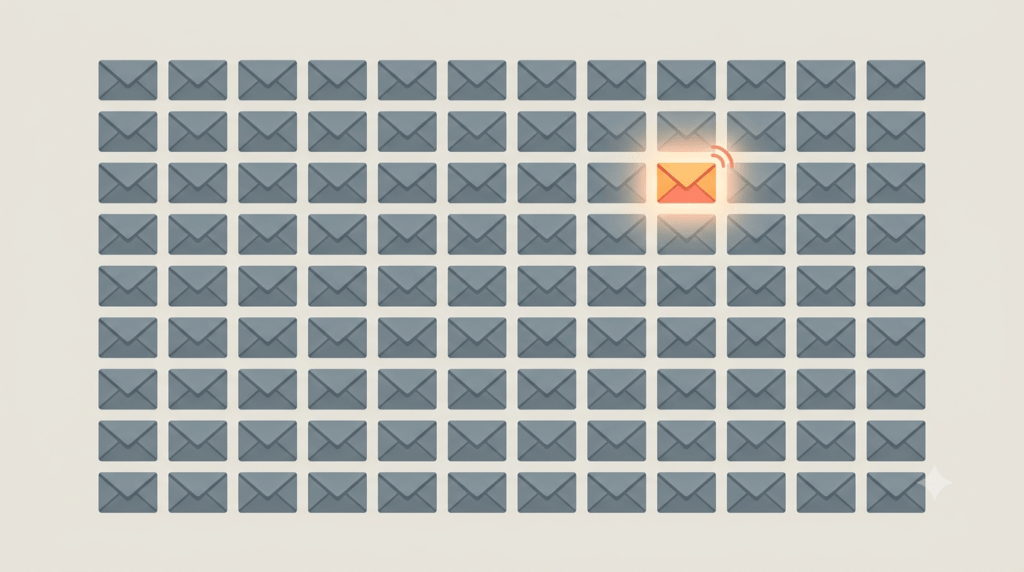
An SDR sends 120 emails this week. Four get opened. One gets a reply, and it says “please remove me from this list.” That scoreboard, repeated across sales teams everywhere, is why “cold outreach is dead” has become a common line in sales Slack channels and LinkedIn comment sections. But the tools that report on cold outreach performance tell a more specific story than “dead.” Response rates on generic, list-based blasts have collapsed. Response rates on outreach that references a real trigger — a funding round, a job change, a specific pain point — have not. The channel isn’t dying. The version of it that treats every prospect identically is.
For SDRs, sales leaders, and growth marketers, that distinction matters more than the debate itself, because the budget conversation that follows is different depending on which one is true. If outreach is dead, the answer is to defund it. If mass outreach is dead and targeted outreach isn’t, the answer is to rebuild the process, not cancel it.
This piece looks at what cold outreach in 2026 actually looks like when it works, why the “dead” narrative took hold, which tools and signals separate outreach that lands from outreach that gets filtered, and where to get outside help building a modern outbound motion if your team doesn’t have the bandwidth in-house.
What Is Cold Outreach in 2026?
Cold outreach in 2026 is the practice of initiating contact with a prospect who has no prior relationship with your company, using a message built around a specific, verifiable signal about that prospect rather than a generic template sent to a purchased list. The word “cold” increasingly describes the relationship, not the research behind the message.
This is a shift from the outbound model of the 2010s, which optimized for volume: more contacts, more sequences, more touches per day. The current model optimizes for relevance density — fewer messages, each backed by a reason the message exists at all. Spam filters, buyer skepticism, and inbox fatigue have made the volume model actively counterproductive rather than just inefficient.
Why Cold Outreach Still Matters for B2B Businesses
It matters because outbound remains one of the only channels a company fully controls. Inbound depends on someone else’s search behavior; outreach can be initiated the moment a signal — a new hire, a product launch, a competitor’s outage — makes a prospect newly reachable.
A few reasons it hasn’t been replaced, only reshaped:
- Speed to a fresh signal. A well-timed message after a trigger event routinely outperforms a cold list send by a wide margin, because timing does more work than copy.
- Coverage inbound can’t reach. Many ideal-fit accounts never search for a solution category by name; outreach is often the only way to reach them at all.
- Pipeline predictability. Sales leaders still rely on outbound to fill pipeline gaps that inbound and referrals leave, especially in categories with long consideration cycles.
The Data Behind the “Cold Outreach Is Dead” Debate
Direct answer: the data shows declining performance for generic, high-volume outreach and stable-to-improving performance for signal-based outreach — two very different trend lines that get flattened into one headline.
Forrester’s B2B buying research has repeatedly found that buyers complete a large share of their research before ever engaging a salesperson, which means outreach that arrives with no evidence of research looks obviously out of step with how the buyer already behaves. Gartner’s account-based marketing guidance similarly points sales and marketing teams toward fewer, more targeted accounts rather than broad list coverage, reflecting the same shift.
What’s actually declining:
- Reply rates on templated, non-personalized email sequences
- Effectiveness of high-volume cold calling with no account research behind it
- Deliverability itself, as spam filters get better at pattern-matching mass-sent copy
What’s holding steady or improving:
- Response rates on messages tied to a specific, named trigger event
- Multi-channel sequences that combine email, LinkedIn, and a warm referral touch
- Outreach from a recognizable individual sender rather than a generic company inbox
What Actually Works Now — Relevance, Timing, and Fit
Direct answer: outreach that performs today is built on three inputs working together — a real signal, correct timing, and message fit to the buyer’s actual situation — not on any single clever line of copy.
Relevance means the message references something true and specific about the prospect’s company: a hiring pattern, a technology switch, a public statement. Timing means the message arrives while that signal is still fresh, typically within days, not weeks. Fit means the offer in the message actually matches what the signal implies the prospect needs, rather than a generic pitch bolted onto a personalized opening line.
Teams that get this right tend to share a common practice: they route account research to whoever is sending the message, instead of separating “list building” from “outreach” into disconnected steps done by different people with no shared context.
Tools and Platforms Powering Modern Outbound
Direct answer: the current outbound stack pairs a signal or intent data source with a sequencing tool and a verification layer, rather than relying on a single all-in-one platform.
Commonly used tools in this stack include:
- Signal and enrichment sources — platforms like Clay, Apollo, and ZoomInfo surface trigger events (funding, hiring, technology changes) that outreach can be built around
- Sequencing and engagement platforms — tools like Outreach and Salesloft manage multi-touch, multi-channel cadences across email, calls, and LinkedIn
- Verification and deliverability tools — email verification and warm-up tools reduce the bounce and spam-flag rates that damage sender reputation over time
- Social selling layers — LinkedIn Sales Navigator supports the multi-channel touches that now outperform single-channel email-only sequences
No single tool replaces the judgment of matching the right signal to the right message — the stack supports that judgment, it doesn’t automate it away.
A Framework for Prioritizing Outreach: The 4R Filter
Rather than deciding whether to send an outreach message based on gut feel or quota pressure, it helps to run each prospect through what we’ll call the 4R Filter — four questions that separate outreach worth sending from outreach that just adds to inbox noise:
- Reason — Is there a specific, named trigger for reaching out right now, not just “they fit our ICP”?
- Recency — Is that trigger still fresh, ideally within the last one to two weeks?
- Relevance — Does the offer in the message actually connect to what the trigger implies the prospect needs?
- Route — Is this the right channel and sender for this specific prospect, based on how they’re likely to engage?
A prospect that fails two or more of the 4Rs is a weak send regardless of how polished the copy is. A prospect that passes all four is worth a message even if the list is small — which is often the actual lesson behind “cold outreach is dead”: the lists got bigger while the standard for sending got lower.
FAQ
What is cold outreach in 2026 and why does it matter for B2B businesses?
It’s the practice of contacting prospects with no prior relationship, now built around a specific trigger signal rather than a generic list send. It still matters because it’s one of the few channels a company fully controls, and it reaches accounts that never enter the inbound funnel at all.
How do I choose the right outreach partner or vendor within my budget?
Prioritize vendors who can show a real sample of signal-based messaging and reply-rate data from a comparable industry, not just a generic case study. Match the engagement type — a research and list-building retainer versus a full outbound-as-a-service model — to how much sending capacity your internal team already has.
What checks should I do before outsourcing outreach?
Confirm the vendor’s data sourcing is compliant with relevant email and data privacy rules, review actual sent samples (not just strategy decks), and check references specifically on deliverability performance, since a burned sending domain can take months to repair.
How long does outreach outsourcing typically take, and what does it cost?
Expect four to eight weeks to stand up a properly researched, signal-based campaign from scratch, with most engagements priced as monthly retainers rather than one-off projects given the ongoing research work involved.
Want a Second Set of Hands on Outbound?
Building a signal-based outreach motion takes research capacity most SDR teams don’t have room for on top of quota. MyB2BNetwork connects sales and growth teams with vetted outbound agencies and SDR-as-a-service providers who specialize in relevance-first outreach, not spray-and-pray lists. Browse outbound and SDR partners on MyB2BNetwork.
Hiring or Outsourcing Outbound Outreach in the U.S.
Two things matter most when a U.S. company brings in outside help for cold outreach: budget fit and due diligence on deliverability practices.
On budget, a lean signal-based outreach retainer (research plus a single sequencer running one to two channels) typically runs $2,500–$6,000 per month, while a fuller SDR-as-a-service engagement with dedicated reps and multi-channel cadences can land in the mid-five-figures to low-six-figures annually. MyB2BNetwork can help source accurate, vetted quotations rather than relying on a vendor’s rate card alone.
On due diligence, ask specifically how the vendor sources contact data and whether that sourcing complies with CAN-SPAM and CCPA rules, since a compliance misstep can damage sender reputation for every domain involved. This applies whether you’re a SaaS company in Austin, a fintech firm in New York, or a logistics business in Atlanta running outbound into regulated buyer segments — the deliverability and compliance bar should scale with how sensitive your target accounts’ industries are.