A case study used to mean a real customer said something true, and a writer captured it well. That formula is breaking down. AI tools can now draft a polished case study from a transcript, a survey, or even a bare set of bullet points, in minutes instead of weeks. Speed isn’t the problem. The problem is that case studies work as proof content because buyers assume a real customer stands behind every claim. AI-generated case studies blur that assumption when a tool fills gaps, smooths quotes, or invents specifics the customer never actually said.
Content marketers and brand managers are stuck between two real pressures. Production timelines keep shrinking, and sales teams want more proof content, faster. But buyers are also more skeptical of manufactured authenticity than they’ve ever been, and one exposed fake quote can undo years of earned trust.
This piece defines what counts as an AI-generated case study, explains where AI genuinely helps versus where it quietly damages trust, and offers a concrete disclosure framework for using AI responsibly in customer stories.
What Are AI-Generated Case Studies?
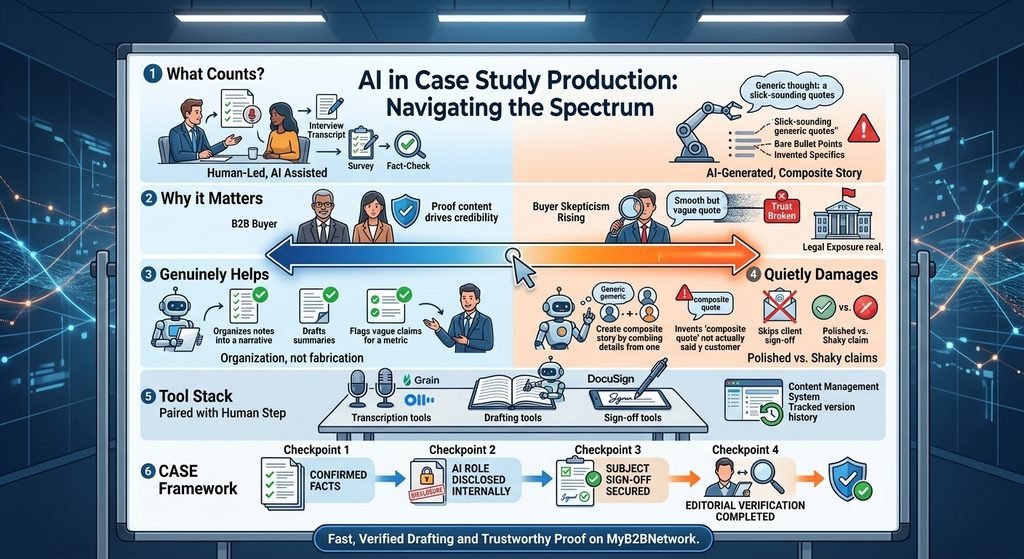
An AI-generated case study is any customer success story where generative AI played a meaningful role in drafting, structuring, or wording the final piece, beyond basic grammar checking. The ethical question isn’t whether AI touched the document. It’s whether the facts, quotes, and outcomes described are still verifiably true.
There’s a real spectrum here. On one end, AI helps a writer organize a real interview transcript into a clean narrative. On the other end, AI generates a plausible-sounding customer quote that no customer ever said. Both get called “AI-generated,” but only one is a genuine ethics problem.
Why This Debate Matters for B2B Businesses
Case studies remain one of the most trusted content formats in B2B buying decisions, because they carry third-party proof that vendor claims aren’t just marketing talk. If that proof becomes unreliable, buyers lose one of their few trusted signals in a crowded market.
A few reasons this matters right now:
- Buyer skepticism is rising fast. Buyers increasingly assume digital content might be AI-touched, and they scrutinize proof content harder than they did even two years ago.
- Legal exposure is real, not theoretical. The FTC has made clear that fabricated or unverifiable testimonials and endorsements can trigger enforcement action, regardless of the tool used to create them.
- Trust, once broken, rarely fully returns. A single exposed fake quote can taint every other case study a brand has ever published, fairly or not.
Where AI Genuinely Helps in Case Study Production
Direct answer: AI helps most with structure, speed, and consistency, not with inventing facts or voices that don’t exist. Used this way, it’s a production tool, not an authenticity risk.
Common legitimate uses include:
- Turning a raw interview transcript into a clean first-draft narrative
- Suggesting a consistent structure across dozens of case studies for a content library
- Drafting headline and summary variations for A/B testing on landing pages
- Flagging vague claims that need a specific number or metric before publishing
In each case, a real customer conversation still exists behind the finished piece. AI is organizing truth, not manufacturing it.
Where AI Damages Trust in Proof Content
Direct answer: AI damages trust the moment it introduces a fact, number, or quote that wasn’t actually verified with the customer, even if it sounds plausible. This is the line between assistance and fabrication.
Watch for these specific risk patterns:
- Generating a customer quote from a brief description instead of an actual transcript
- Rounding or inventing a metric (“40% faster”) without a verified source number
- Combining details from multiple customers into one composite story presented as a single account
- Skipping final customer sign-off because the draft “sounds close enough” to what they said
Forrester’s research on B2B buyer trust has consistently found that specificity and verifiability drive credibility in proof content far more than polish does. A vague but true case study outperforms a slick but shaky one.
Tools and Platforms Content Teams Are Using
Direct answer: most teams now pair a transcription tool, a drafting assistant, and a customer sign-off workflow, rather than relying on one tool to do the whole job.
The typical stack includes:
- Transcription and interview tools — platforms like Otter.ai or Grain capture the actual customer conversation as the source of truth
- Drafting assistants — general AI writing tools help structure and word the narrative from that verified transcript
- Approval and sign-off workflows — tools like DocuSign or simple email sign-off chains confirm the customer reviewed the final quotes and numbers before publishing
- Content management systems — platforms track which version of a case study a customer actually approved, protecting the brand if a claim is later questioned
Gartner’s guidance on generative AI in marketing content echoes this pattern: AI works best paired with a human verification step, not as a replacement for one.
A Disclosure Guideline: The CASE Framework
Rather than treating AI disclosure as an afterthought, it helps to run every customer story through what we’ll call the CASE Framework, four checkpoints before anything goes live.
- Confirmed facts — every number, metric, and outcome traces back to a source the customer actually provided, not an AI estimate.
- AI role disclosed internally — the team documents exactly where AI assisted, even if that note never appears publicly, so it’s traceable if questioned later.
- Subject sign-off secured — the actual customer reviews and approves the final quotes and claims attributed to them, in writing, before publication.
- Editorial verification completed — a human editor confirms the piece matches the source material, not just that it reads well.
Public-facing AI disclosure isn’t always necessary if every claim is verified and customer-approved. It becomes necessary the moment AI-originated content (an invented quote, an estimated stat) survives into the final published piece.
FAQ
What are AI-generated case studies, and why does this debate matter for B2B businesses?
They’re customer success stories where AI played a meaningful role in drafting or wording the content. It matters because case studies only work as proof when buyers trust the claims are real, and AI can quietly undermine that trust if used carelessly.
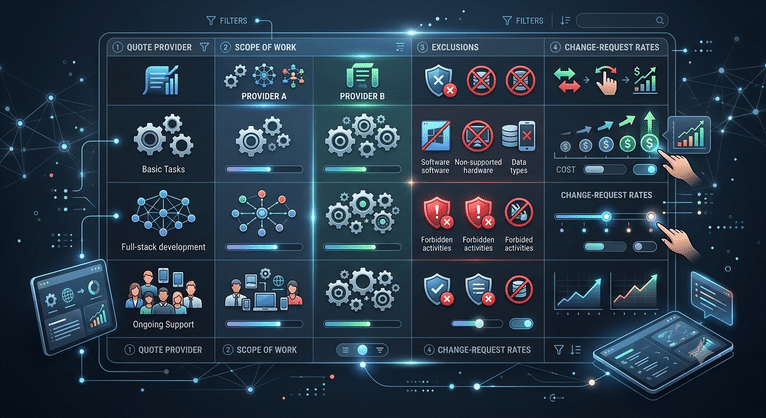
How do I choose the right partner for AI-assisted case study production within my budget?
Look for a vendor who treats AI as a drafting aid built on verified transcripts, not a shortcut around customer interviews. Ask to see their sign-off process before comparing price, since a cheap case study with no verification step carries real legal and reputational risk.
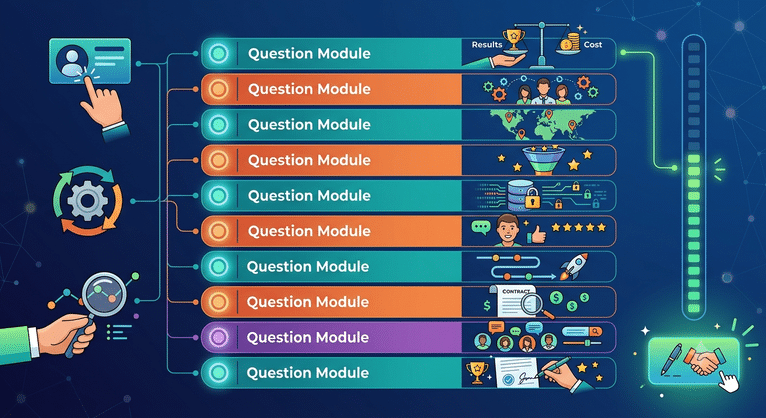
What checks should I do before outsourcing case study production?
Confirm the vendor secures written customer sign-off on every quote and metric, and ask how they document which parts of a draft came from AI versus the original interview. Review past examples for specificity, since vague claims are often a sign facts weren’t fully verified.
How long does AI-Generated case studies production typically take, and what does it cost?
A single well-verified case study usually takes two to four weeks, factoring in customer scheduling and sign-off delays. A batch program producing several case studies per quarter is more commonly billed as an ongoing retainer than a per-piece fee.
Need Case Studies That Hold Up to Scrutiny?
Fast, AI-assisted drafting and verified, trustworthy proof content aren’t opposites, but getting both takes the right process. MyB2BNetwork connects content marketers and brand managers with vetted case study and customer marketing specialists who build in verification from the start. Find verified case study partners on MyB2BNetwork.
Hiring or Outsourcing AI-Generated Case Studies Production in the U.S.
Two things matter most when a U.S. company outsources case study or customer story production: budget fit and verification due diligence.
On budget, a single professionally produced, verified case study typically runs $1,500–$4,000, depending on interview complexity and design needs. A quarterly program producing four to six case studies often lands in the low-to-mid five-figures per quarter. MyB2BNetwork can help source accurate, vetted quotations rather than relying on a single vendor’s rate card.
On due diligence, ask directly whether the vendor secures written customer sign-off before publishing, and how they’d handle a claim a customer later disputes. This matters across industries, whether you’re a SaaS company in Austin, a healthcare vendor in Chicago navigating HIPAA-sensitive customer data, or a manufacturing firm in Ohio citing specific operational metrics that competitors could challenge.