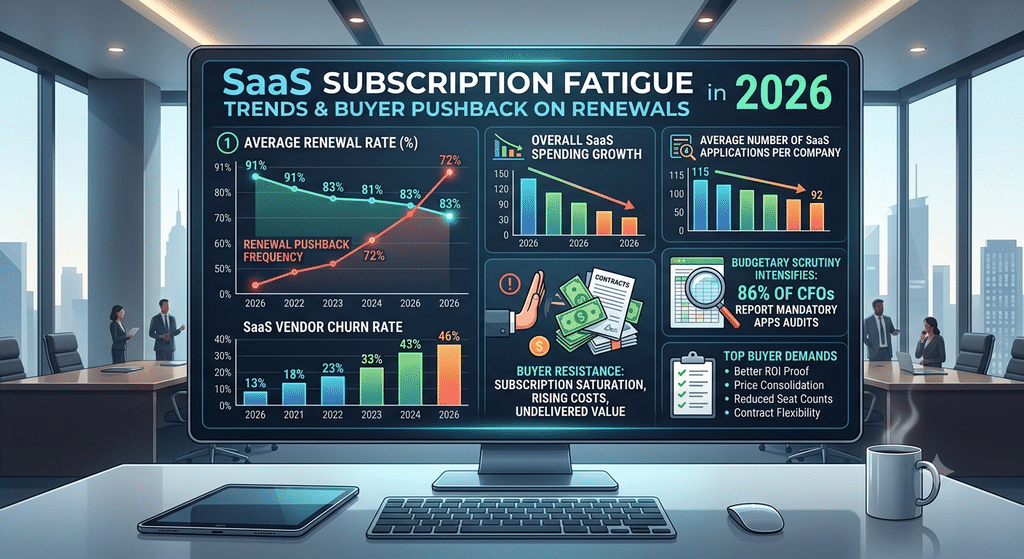
SaaS subscription fatigue has moved from a vague buyer complaint to a measurable budget problem, and the numbers back it up. Gartner’s research on SaaS spend management shows organizations without centralized visibility into their software portfolio overspend by at least 25% through 2027. Largely on licenses and tools nobody is actively using. For SaaS founders and customer success teams, that’s no longer background noise. It’s the reason renewals are getting harder, procurement is asking sharper questions, and “just add it to the stack” has stopped being an easy yes.
The pressure is coming from both directions at once. Zylo’s 2026 SaaS Management Index found that the average enterprise now runs 305 applications in its software portfolio. Up from a much smaller number just a few years ago. While 79% of IT leaders reported encountering a price increase at their most recent renewal. At the same time, corporate IT budgets are growing roughly 2.8% a year. While SaaS subscription costs from major vendors rose 10% to 20% in 2025 alone. That math doesn’t close on its own, and buyers know it.
This isn’t a story about SaaS dying — spend is still growing overall. It’s a story about SaaS subscription fatigue changing who gets renewed without a fight and who doesn’t. Buyers are auditing tool overlap, pushing back on auto-renewals, and asking vendors to prove ongoing value instead of assuming it. Vendors who treat that scrutiny as a temporary annoyance are the ones most likely to get cut in the next budget cycle.
This piece breaks down what SaaS subscription fatigue actually looks like from the buyer’s side, why it’s intensified now. And three concrete pricing and packaging changes vendors can make to stay on the right side of the next renewal conversation.
What Is SaaS Subscription Fatigue?
SaaS subscription fatigue is the buyer-side resistance that builds up when an organization’s software spend outpaces its ability to track, justify, and get full value from every tool it’s paying for. It shows up as renewal hesitation, tool audits, and a general reluctance to add “just one more” subscription. Even when the individual tool is genuinely useful.
It’s distinct from simple budget cuts. A company experiencing SaaS subscription fatigue isn’t necessarily spending less overall. Gartner still projects global software spending to reach $1.43 trillion in 2026 — it’s spending more deliberately. With far more scrutiny applied to each individual line item than in previous years.
Why SaaS Subscription Fatigue Matters for B2B Businesses
It matters because the buyers experiencing SaaS subscription fatigue are the same buyers deciding whether your renewal gets signed without discussion or escalated for review. Gartner estimates that roughly 30% of SaaS spend is “toxic”. Consumed by unused licenses, redundant tools, and features nobody asked for. And finance and procurement teams are now actively hunting for exactly that category of spend.
For SaaS founders, this changes what a healthy renewal conversation looks like. It’s no longer enough for a product to work. A vendor increasingly has to make the value visible and specific enough that cutting it feels like a real loss, not a line-item cleanup. Customer success teams are on the front line of that shift. Since usage data and adoption metrics are what actually settle these conversations now.
What Are the Warning Signs of SaaS Subscription Fatigue in a Customer Base?
The clearest signs are behavioral, and they usually show up in usage data before they show up in a renewal call. Falling seat utilization, delayed or hesitant renewal sign-offs. And increased questions about downgrading or pausing a plan are the earliest indicators that a customer is reassessing.
A few more specific patterns worth tracking:
- Consolidation requests — a customer asking whether your platform can absorb functionality from another tool they’re planning to cut.
- Usage-based renegotiation — a customer pushing to move off a flat per-seat plan onto something tied more closely to actual usage.
- Procurement involvement on renewals that used to be automatic — a sign the account has been flagged in a broader software audit.
- Increased support tickets about reporting or ROI data — often a signal the customer needs to justify the spend internally, not just use the product.
BetterCloud’s 2026 State of SaaS research found that 63% of organizations cite too many unused or underutilized apps. Combined with license and budget pressure, as the main driver behind active consolidation efforts. Which means these signals are increasingly common, not edge cases.
Which Pricing Model Best Eases Budget Pressure for Buyers?
No single pricing model eliminates SaaS subscription fatigue. But some structures create far less renewal friction than others because they scale more visibly with actual value delivered. The table below compares the three most common approaches on the dimension buyers care about most right now: whether the price feels justified by usage.
| Pricing Model | How Buyers Perceive It Under Budget Pressure | Best Fit |
|---|---|---|
| Per-seat / flat licensing | Highest fatigue risk — cost feels fixed even when usage drops, making it an easy audit target | Products with consistently high, predictable daily usage across most seats |
| Usage-based / consumption pricing | Lower fatigue risk — cost visibly tracks activity, which is easier to defend internally | Tools with variable or occasional usage across the buying organization |
| Hybrid (base fee + usage or AI credits) | Moderate fatigue risk — predictable enough for budgeting, flexible enough to reflect real usage | Platforms adding metered features (like AI capabilities) alongside a core subscription |
Gartner projects that by 2027, 70% of leading SaaS vendors will offer consumption-based pricing across at least part of their portfolio. A strong signal that the market is already moving away from pure per-seat models as the default response to buyer pushback.
How Should SaaS Vendors Respond to Subscription Fatigue? The EPR Framework
Vendors can respond to SaaS subscription fatigue by restructuring around three principles: Elasticity, Proof, and Right-sizing — together, the EPR Framework. Each addresses a different part of why buyers push back, and together they map directly onto the pricing and packaging changes with the most evidence behind them right now.
- Elasticity — build flexibility into the contract, not just the product. Offer quarterly opt-outs, pause options instead of forcing a full cancellation, or usage-based tiers that flex with actual seat activity. A contract that can shrink temporarily is far less likely to be cut entirely.
- Proof — make ROI visible before the renewal conversation, not during it. Usage dashboards, quarterly business reviews with concrete adoption metrics, and proactive alerts when a customer’s utilization drops all shift the value conversation from “convince me” to “here’s what we already know.”
- Right-sizing — package around actual usage tiers, not one-size-fits-all seats. Bundling underused features into a smaller core plan, with clear upgrade paths, reduces the “why am I paying for all this” feeling that drives tool audits in the first place.
None of these three changes requires a full pricing overhaul to start. A vendor can pilot a pause option or a usage dashboard with existing customers well before rebuilding pricing tiers from scratch. And piloting first is usually the more honest way to find out whether a change actually reduces churn before committing to it company-wide.
FAQ
What is SaaS subscription fatigue and why does it matter for B2B businesses?
SaaS subscription fatigue is the buyer-side resistance that builds when software spend outpaces an organization’s ability to track and justify the value of each tool. It matters because Gartner estimates roughly 30% of SaaS spend is currently “toxic”. Unused or redundant — and buyers are actively hunting for exactly that spend at renewal time.
How do I choose the right SaaS spend management or FinOps partner within my budget?
Start by defining whether you need software license auditing, renewal negotiation support. Or full ongoing SaaS spend management, since scope changes cost significantly. Prioritize partners who can show real utilization and consolidation data from past engagements, not just a general promise to “cut costs.”
What checks should I do before bringing in outside help to address subscription fatigue?
Ask for case studies with real percentage savings and timelines, and confirm how the partner accesses and secures your SaaS usage and billing data. Review their process for evaluating tool overlap and make sure recommendations will involve your actual department heads. Not just a centralized audit that ignores context.
How long does addressing subscription fatigue typically take and what does it cost?
A focused software audit and consolidation review typically takes 4–8 weeks for a mid-sized SaaS portfolio. With fuller renegotiation and rollout of new pricing terms extending to 3–6 months. Costs for outsourced SaaS spend management commonly range from the low four figures per month for a lean audit to the mid-five-figures annually for ongoing management of a larger, more complex portfolio.
Get Ahead of SaaS Subscription Fatigue With MyB2BNetwork
Whether you’re a SaaS founder trying to price around subscription fatigue or a buyer trying to get your own software stack under control. The right partner makes the difference between guessing and knowing where the waste actually is. MyB2BNetwork connects SaaS founders and customer success leaders with vetted pricing strategy and SaaS spend management partners who bring real usage-data experience. Not just a generic cost-cutting pitch — and can get you accurate, comparable quotes before you commit to one.
Browse our SaaS pricing and packaging partners to compare vendors on real renewal outcomes. Or read our related piece on protecting your IP when outsourcing product development if you’re evaluating outside help to rebuild your pricing model or platform.
How to Hire a SaaS Spend Management Partner in the U.S.
Software audits and SaaS spend management are in high demand among SaaS companies in Austin managing their own vendor stack. And among mid-market enterprises in cities like Chicago and New York working to reduce the kind of software sprawl Zylo and BetterCloud have both documented at scale. Two things matter most before you bring in outside help.
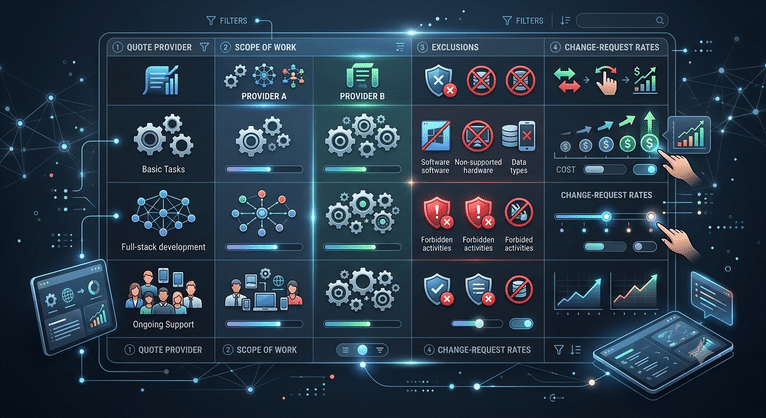
How to choose a vendor within budget. Filter first by whether you need a one-time audit or ongoing FinOps-style management. Since the second option costs meaningfully more but pays for itself faster in larger, more complex portfolios. Budgets typically start in the low four figures per month for a focused audit of a small-to-mid-sized stack and scale into the mid-five-figures annually for continuous management of an enterprise portfolio. And MyB2BNetwork can help you get accurate, comparable quotes across vendors before you commit.
Checks needed before engaging a partner. Confirm how the vendor secures access to your billing and usage data. SOC 2 compliance is a reasonable baseline to require, and GDPR or CCPA considerations apply if any of the audited tools touch EU or California customer data. Ask for references showing real consolidation outcomes, not just projected savings. And get reporting cadence and data-access terms written into the contract before granting access to your SaaS admin consoles.