Turning a buyer’s brief into a winning proposal faster isn’t about cutting corners. It’s about cutting the parts of the process that never should have taken this long in the first place. Most sellers lose deals not because their work is worse than the competition’s, but because by the time their proposal lands. The buyer has already moved on to someone who replied first.
The data backs this up. Loopio’s RFP Benchmarks & Trends research, based on a survey of more than 650 proposal professionals across North America. Found that the average team spends 23 hours writing a single RFP response and involves nine people in the process. And still, companies only respond to 65% of the RFPs and briefs they receive at all. Meanwhile, research on proposal efficiency has found that teams who spend less time on administrative busywork and more time on strategic customization see win rates 15–25% higher than peers doing the opposite.
That gap between “slow and generic” and “fast and sharp” is exactly where deals are won or lost before a buyer even finishes reading. If you’re a seller, agency, or freelancer competing for inbound briefs, turning a buyer’s brief into a winning proposal faster isn’t a nice efficiency gain. It’s often the single biggest lever you have over win rate, bigger than price or even portfolio strength.
This piece breaks down exactly why speed and quality aren’t actually in tension here. What’s slowing most sellers down, and how to build a repeatable system for turning a buyer’s brief into a winning proposal faster without it reading like a template.
What Does It Mean to Turn a Buyer’s Brief Into a Winning Proposal Faster?
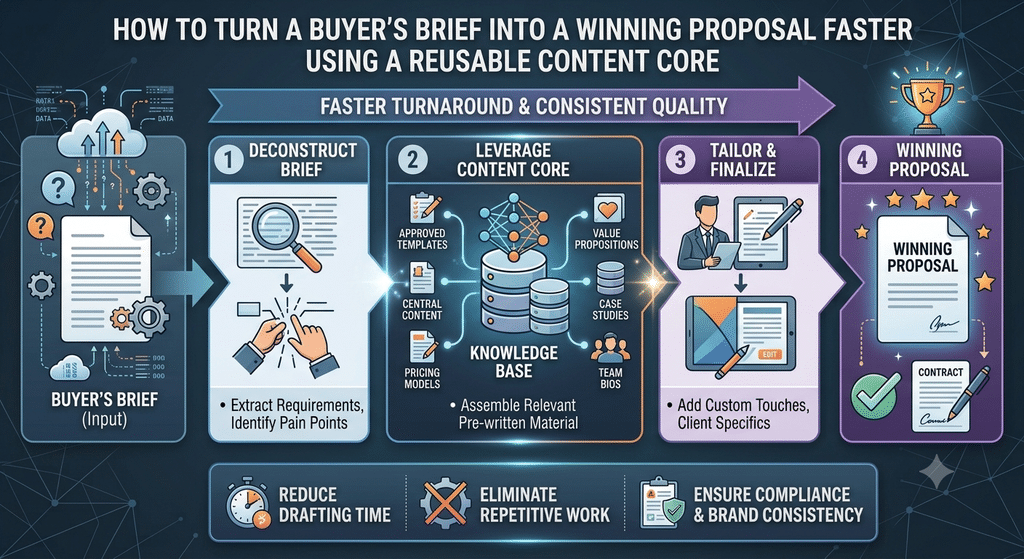
Turning a buyer’s brief into a winning proposal faster means compressing the time between receiving a brief and submitting a sharp. Customized response, without sacrificing the specificity that actually wins the deal. It’s not about rushing; it’s about eliminating the wasted hours most teams spend rebuilding boilerplate, chasing internal approvals, and starting each proposal from a blank page.
The fastest sellers aren’t typing faster. They’ve simply removed the repeatable 80% of the work — company background, standard capabilities, pricing structures, case studies. From the clock entirely, every hour they do spend goes directly into 20% that’s actually specific to this buyer’s brief.
Why Does Turning a Buyer’s Brief Into a Winning Proposal Faster Matter for B2B Businesses?
It matters because buyers notice response speed even when they don’t say so out loud. A buyer evaluating five vendors against the same brief forms an impression of each one before reading a single line of the proposal itself. And the vendor who replies within a day, with a response that’s clearly built for this brief rather than recycled from the last one, starts the evaluation already ahead.
It also matters economically. Loopio’s research puts the average RFP win rate at 47%, and the firms that consistently beat that average aren’t the ones with the biggest proposal teams. They’re the ones with the most efficient process. Every hour saved on repeatable sections is an hour reinvested in parts of brief that actually move the buyer’s decision. Which is the entire reason turning a buyer’s brief into a winning proposal faster correlates with winning more of them.
What’s Actually Slowing Most Proposal Processes Down?
Most delays have nothing to do with the writing itself — they’re structural. A few show up again and again:
- Starting from a blank page every time, rebuilding sections (company overview, team bios, standard terms) that are nearly identical across every proposal a seller sends.
- Too many internal approvers. Loopio’s data found the average proposal involves nine contributors. Every additional reviewer adds a round-trip delay that has nothing to do with the brief’s actual complexity.
- No go/no-go filter. Teams that qualify a brief before investing time in a full response consistently show higher win rates. Chasing every brief regardless of fit wastes hours that could go toward stronger-fit opportunities.
- Treating every proposal as entirely bespoke, instead of reusing a vetted core and customizing only the sections the buyer will actually scrutinize.
None of these are quality problems. They’re process problems, and process problems are exactly what a faster system is built to remove.
How Do You Build a Repeatable System Without Sounding Templated?
The core move is separating your proposal into two layers: a reusable core and a brief-specific layer. And being disciplined about which sections belong in which. Company background, methodology, standard case studies, and pricing frameworks belong in the reusable core. Buyers don’t expect those to be reinvented for them, and rewriting them from scratch adds hours without adding value.
The brief-specific layer is where the real win-or-lose decision gets made: a direct restatement of the buyer’s stated problem in their own language. A proposed approach that references specifics from their brief rather than generic capability claims. And a scope and timeline that map precisely to what they asked for rather than a standard package. Spending nearly all your freed-up time here — instead of splitting it evenly across every section. Is what makes a fast proposal still feel personally built for the buyer who’s reading it.
| Approach | Average Time per Proposal | Win Rate Pattern |
|---|---|---|
| Fully bespoke, built from scratch each time | ~23 hours (industry average) | Tracks the ~47% industry average |
| Reusable core + brief-specific customization | Significantly reduced hours on repeatable sections | Reported 15–25% higher among efficiency-focused teams |
| Templated, minimal customization | Fastest turnaround | Lower — buyers can tell when a response wasn’t built for their brief |
The middle row is the target: fast because the repeatable work is already done. Strong because the time saved goes straight into what’s actually brief-specific.
FAQ
What does it mean to turn a buyer’s brief into a winning proposal faster, and why does it matter for B2B businesses?
It means cutting the time spent on repeatable, generic sections of a proposal so more time and attention goes toward the parts a buyer actually evaluates. It matters because buyers notice both speed and specificity. And sellers who deliver both consistently win more of the briefs they respond to.
How do I choose the right proposal process or tool within my budget?
Start by identifying which sections of your last five proposals were nearly identical — those are your reusable core. And even a simple shared document library solves most of the time problem before you spend on software. If volume justifies it, proposal management tools range from low-cost template libraries to full RFP response platforms with content search and approval workflows built in.
What checks should I do before outsourcing or templating my proposal process?
Review your last several proposals for sections that were rewritten unnecessarily versus ones that were genuinely brief-specific. And confirm your team has a clear go/no-go process so time isn’t spent on poor-fit briefs. If outsourcing proposal writing support, check for relevant industry experience and ask to see anonymized past work, not just a generic pitch.
How long does it take to build a faster proposal system, and what does it cost?
Building a basic reusable content library typically takes 1–2 weeks of consolidating existing materials. A full proposal management platform with workflow automation can take 4–8 weeks to implement properly. Costs range from effectively free (a well-organized shared drive) to a few hundred dollars per month for dedicated RFP response software, scaling with team size and proposal volume.
Respond to Better Briefs, Faster, With MyB2BNetwork
Turning a buyer’s brief into a winning proposal faster starts with getting the right briefs in front of you in the first place. MyB2BNetwork connects sellers and agencies directly with qualified B2B buyers actively looking for vendors. So instead of chasing cold leads, you’re responding to briefs from buyers who are ready to decide, with the specificity and speed that wins the business.
Browse active buyer briefs on our marketplace to find opportunities matched to your capabilities. Or read our related guide on vendor response time benchmarks to see how same speed advantage applies moment a buyer replies back to you.
How to Build Fast-Proposal Capability as a U.S.-Based Seller
Sellers and agencies turning buyer briefs into proposals faster show up across every major U.S. market. Marketing agencies in Austin responding to SaaS briefs, consultancies in New York bidding on fintech engagements. And logistics vendors in Atlanta competing for manufacturing contracts out of Ohio. Two things matter most if you’re building this capability yourself rather than outsourcing it.
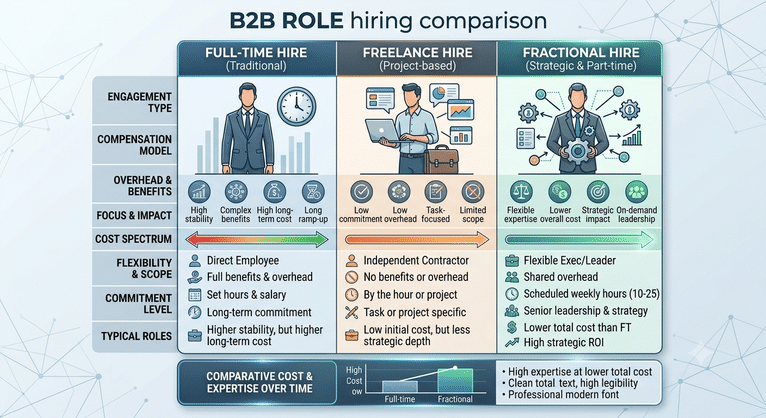
How to choose a vendor or tool within budget. If you’re bringing in outside help to build your proposal system — a freelance proposal writer, a consultant, or a software implementation partner — filter first by whether they’ve worked in your specific industry, since generic proposal expertise rarely captures the technical specifics buyers scrutinize most. Costs range from a few hundred dollars for a one-time proposal template build to low-to-mid four figures monthly for an ongoing fractional proposal-writing resource, and MyB2BNetwork can help you get comparable quotes across vetted providers.
Checks needed before outsourcing. Ask to see examples of past proposals the writer or vendor has built, and confirm they understand confidentiality expectations if your proposals include pricing or strategy that’s sensitive — a basic NDA is reasonable even for a short-term engagement. Set a clear go/no-go process in writing before engaging anyone, and budget 1–2 weeks to build or refine your reusable content library before expecting the full speed benefit to show up in your next brief response.