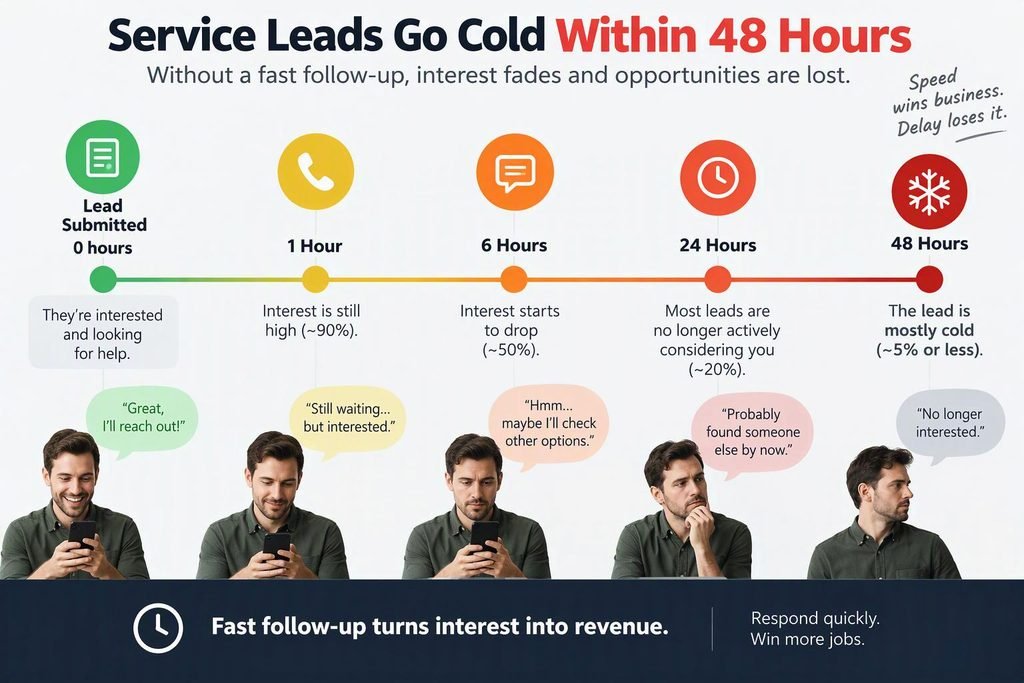
Service leads go cold faster than most founders and CTOs expect, and the cause is rarely a bad offer. It is almost always a slow, inconsistent first response. A prospect fills in your form while the problem is fresh, hears nothing useful for a day or two, and by then has already spoken to someone who answered.
The research behind this is old but consistent. A Harvard Business Review audit of 2,241 U.S. firms found an average first response time of 42 hours. Only 37% of those companies replied within an hour, and 23% never replied at all. Responding in minutes would put you ahead of most of the market.
Each leader owns part of the fix. Founders set the response standard. CTOs build the routing and automation that makes it possible. Legal approves the templates and consent language so speed doesn’t create risk. When one of the three is missing, service leads go cold even though everyone is working hard.
This post explains why it happens, what the data does and doesn’t prove, a simple rescue plan you can start this week, and how MyB2BNetwork can help you carry it out.
What Does It Mean When Service Leads Go Cold?
A service lead goes cold when a prospect who showed clear interest, by submitting a form, requesting a quote, or booking a call, stops engaging before you have a real conversation. The interest was real. The attention moved on.
It differs from a lead that was never qualified. A cold lead is a good-fit prospect you lost through timing and follow-up, which makes it the cheapest pipeline you can recover.
Why Do Service Leads Go Cold So Fast?
Because buyers research several vendors at once and treat the first useful reply as a signal of how you will behave as a partner. Slow replies create a gap, and a competitor fills it. The common causes are internal, not market-driven:
- Routing delays. The inquiry goes to a shared inbox, then to marketing, then to sales, and a day disappears.
- No after-hours coverage. A large share of inquiries arrive outside business hours and wait until the next morning.
- One-and-done follow-up. A single email or call is treated as “tried,” and the lead is dropped.
- Generic first replies. A template that ignores what the prospect asked reads as automation.
- No ownership. Nobody is named responsible, so everyone assumes someone else replied.
What Does the Research Actually Say About the 48-Hour Window?
It says speed matters enormously, but no single study pins down 48 hours as a precise cliff. The number is a practical shorthand: odds fall sharply in the first minutes and hours, and by day two you are usually competing with vendors who have already replied.
Here is what is well supported:
- HBR, 2011 (Oldroyd): 42-hour average first response, with 23% of firms never responding.
- MIT and InsideSales.com Lead Response Management study: analysis of more than 15,000 web leads and 100,000 call attempts. As widely reported, contacting a lead within five minutes made it roughly 21 times more likely to be qualified than waiting 30 minutes.
- First-responder advantage: many vendor reports say around 78% of buyers go with the first company to respond. Attribution varies between sources, so treat it as directional.
Several newer vendor blogs quote precise decay figures for the 48-hour mark. They rarely trace back to a primary study, so this post doesn’t repeat them as fact.
How Do You Fix It? The 48-Hour Rescue Model
The 48-Hour Rescue Model gives every inbound lead a defined path, a named owner, and a deadline. It works best when each of the three leaders owns their row.
| Window | Action | Owner |
|---|---|---|
| Before day 0 | Approve reply templates, consent and opt-out language, and escalation rules | Legal |
| 0 to 5 minutes | Auto-acknowledge and route the lead to a named person | CTO |
| 5 to 60 minutes | Send a human first reply that answers the specific question asked | Founder or sales owner |
| 1 to 24 hours | Second touch on a different channel, with something useful attached | Sales owner |
| 24 to 48 hours | Third and fourth touches, offer call times, log the outcome in the CRM | Sales owner, with CTO reporting |
Two details make the model work. First, the auto-acknowledgment buys goodwill but doesn’t count as a response, so the human reply is the real clock. Second, practitioners of speed-to-lead often recommend roughly six touches across the first 48 hours, since a single attempt gives up too early.
How Can My B2B Network Help You Keep Service Leads From Going Cold?
My B2B Network helps in two ways: it gets you in front of buyers who are actively looking for services, and it connects you with vetted partners who can build the response capacity to convert them. The platform’s role is to shorten the distance between a business with a need and a provider ready to answer.
Depending on where you sit, here is how that works in practice:
- If you sell services: use My B2B Network to reach buyers already searching for providers, and to find outbound and response-management partners who can cover after-hours and follow-up while your team focuses on delivery.
- If you build the systems (CTOs): get matched with specialists in CRM routing, lead assignment, and response tracking so the 0 to 5 minute step is automated rather than manual.
- If you manage risk (Legal): compare vendors on how they handle consent, data, and contract terms before any lead data is shared, with quotes side by side.
- If you buy services: shortlist providers that can show real response-time data, since a vendor’s speed before signing is a fair preview of its speed afterward.
You also avoid starting from scratch. Instead of vetting a dozen vendors alone, you can compare options and get accurate quotations through one place.
FAQ
Why do service leads go cold and why does it matter for B2B businesses?
Service leads go cold because buyers compare several providers at once and favor whoever replies first with something useful. It matters because cold leads are good-fit prospects you already paid to attract, so losing them to slow follow-up wastes marketing spend.
How do I choose the right vendor to fix slow lead response within my budget?
Start with the gap: after-hours coverage, human first replies, or CRM automation each cost differently. Ask vendors for their own measured response-time data and for references from service businesses, and avoid anyone guaranteeing a specific close rate.
What checks should I do before outsourcing lead response and follow-up?
Require access through your own CRM and email accounts so you keep the data. Ask how they handle consent, opt-outs, and data security, and put response-time targets, reporting, and exit terms in the contract.
How long does outsourcing lead response typically take and what does it cost?
Setup usually takes two to four weeks, including integration and template approval, and results become measurable within a couple of months. Costs run from a modest project fee to a monthly retainer, depending on hours covered and channels.
Stop Losing Leads: Talk to My B2B Network
If your service leads go cold while your team is busy delivering work, the fix is a clear process and the right partner, not more ad spend. MyB2BNetwork can match you with vetted response, outbound, and CRM partners and help you compare quotes before you commit.
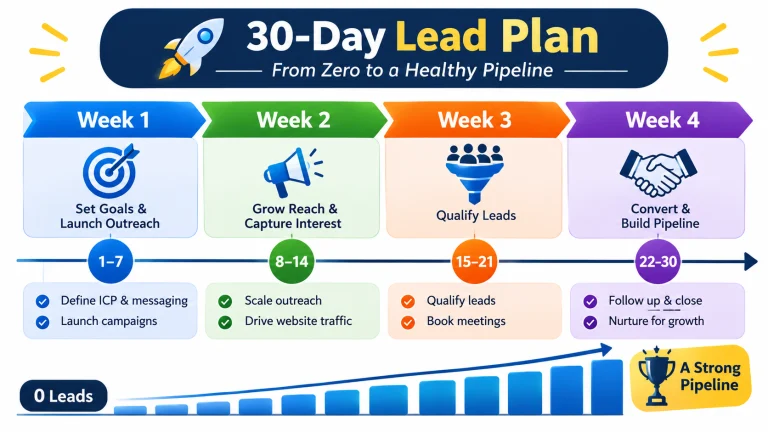
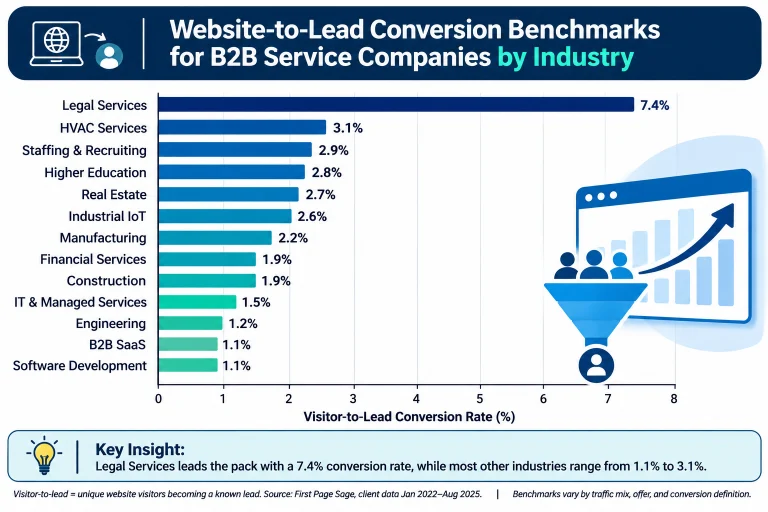
Start by reading our vendor response time study to see where your speed stands, explore our 30-day lead plan for agencies, and check your website-to-lead conversion rate so you know how many leads are worth saving. Then reach out to MyB2BNetwork for matched partner quotes.
How to Hire, Source, or Outsource Lead Response in the U.S.
Service companies across the U.S. outsource lead response, from SaaS firms in Austin and fintech teams in New York to B2B companies in San Francisco and logistics providers in Atlanta. Two things matter most.
Choosing a vendor within budget. Scope drives price. Outsourced lead response and follow-up commonly runs roughly $2,000 to $8,000 per month depending on hours and channels, while one lead generation firm notes a fully loaded in-house SDR in the U.S. costs $70,000 to $90,000 a year before ramp time. These are approximate market ranges, and MyB2BNetwork can get accurate quotations for your scope. Prioritize vendors who can show measured response times and clear after-hours coverage.
Checks before outsourcing. Ask how the vendor follows the FTC’s CAN-SPAM rules for email, and TCPA requirements if calls or texts are involved, since faster outreach should never skip consent. If you serve California contacts or EU and UK contacts, ask about CCPA and GDPR or UK GDPR handling. A SOC 2 report or ISO 27001 certification is a reasonable baseline if the vendor will touch your CRM. Plan for two to four weeks of setup before you judge the results.